Eggplant and Sausage Panzerotti

HOW TO MAKE EGGPLANT AND SAUSAGE PANZEROTTI

I give this recipe weekend status not because it’s terribly time-intensive. But simply because anything involving dough or pastry usually involves more time than we can give mid-week.

Weekday or weekend, I still recommend purchasing a good-quality prepared pizza dough from your local market. I say this not because you can’t make a fantastic dough on your own (and you can!) but because it adds unnecessary time. Good quality pizza dough can be found easily. No need to take time proofing your own dough – unless, of course, you’d like to!

You’ll need to pull out your prepared dough from the fridge about 20 minutes before using it in order to bring it to room temperature and to make it pliable.

HERE’S WHAT YOU’LL NEED:

Servings: 2 (assuming 2 panzerotti per person)

1 250g pizza dough (store bought), at room temperature

1 eggplant, diced into 1.5” pieces

5-6 cloves garlic

2 T olive oil

½ teaspoon dried oregano

salt & pepper

¾ cup (200g) pizza mozzarella, shredded (or fresh mozzarella, cubed)

2 Italian sausages, casings removed, and cut into 1” balls

1-1.5 cups marinara sauce

olive oil for brushing

white flour for dusting the dough

HERE’S HOW TO MAKE EGGPLANT SAUSAGE PANZEROTTI:

Prep your marinara: If you’re making your own marinara sauce, do this first. If you’re using my marinara sauce recipe, simply swap out the ground beef for the two Italian sausages. Remove casings on the sausages, break the meat down into 1” bits, sauté them, and then proceed with the marinara recipe (see my Eggplant Parmesan recipe). If you’re using jarred marinara sauce, simply sauté the sausage bits for about 3-4 minutes, then add about a cup and a half of jarred sauce to warm it.

Prep the eggplant for roasting: Cut the eggplant into 1.5” cubes. In a large roasting pan, toss the eggplant with garlic cloves, olive oil, oregano, and season well. Roast for about 30 minutes in the oven at 400˚F.

Combine the Eggplant and Marinara: When the eggplant has finished roasting, combine it with the sausage and marinara sauce.

Roll out your dough: Assuming your dough has been out of the fridge for about 20 minutes, cut it into quarters. Take each quarter and roll it into a ball, then work each quarter into a small circle, about 5” in diameter. Use flour to dust the dough to make it pliable and less sticky. Roll it out to about ¼” inch thick.

Fill the dough: Take each circle of dough and fill the right half with a scoop of eggplant/sausage mixture, top it with about a tablespoon of shredded cheese, and then seal the envelope of dough by turning the left side over to the right side to create a crescent shape. Seal the edges by pinching them and using a little water to seal any gaps.

Bake for about 14 minutes at 400F: Bake until the dough looks golden brown, about 14 minutes. Remember, both your eggplant and your marinara are cooked. The baking process in simply to melt the cheese, combine flavors, and bake the dough. Serve a panzerotto or two to each person.

TIPS AND TROUBLESHOOTING:

Be careful with liquid amounts in the filling: I use a slotted spoon when adding the eggplant/sausage/marinara mixture to the dough in order to control the liquid (i.e. the marinara). If you add too much sauce, this can break the seal of your pastry when baking. While liquid leaking from your pastry doesn’t affect flavor, it affects appearance – so…if you’re entertaining and making lots of these, you’ll want to be a bit careful!
Seared Pork Tenderloin with Cauliflower (A.K.A. Battle: Garlic Powder)

How to Make Seared Pork Tenderloin with Cauliflower

I’m instinctively an advocate for the unsung hero. And in this case, it’s two-fold: pork and garlic powder.

Pork seems to be the bastard child of white meats in the cooking world, and I’ve never understood why. Chicken is commonly heralded as the white meat of choice, the most versatile, the most affordable (which is highly questionable these days). And turkey holds the limelight on major holidays like Thanksgiving and Christmas.

But what about pork? In my mind, pork needs a brand re-boot as an enviable alternative to both chicken and turkey.

And as for garlic powder…

Being the know-it-all in the kitchen that I am, I often defy listening to my mother. And when it comes to garlic, and more specifically, garlic powder, I have taken issue in the past with guess who. I’ve caught my Mom using garlic powder in a number of recipes and attempted to apprehend her: “Garlic powder?!” (me, in an elevated voice). I mean, really. It’s a supreme sacrilege for any cook (outside of a dry rub).

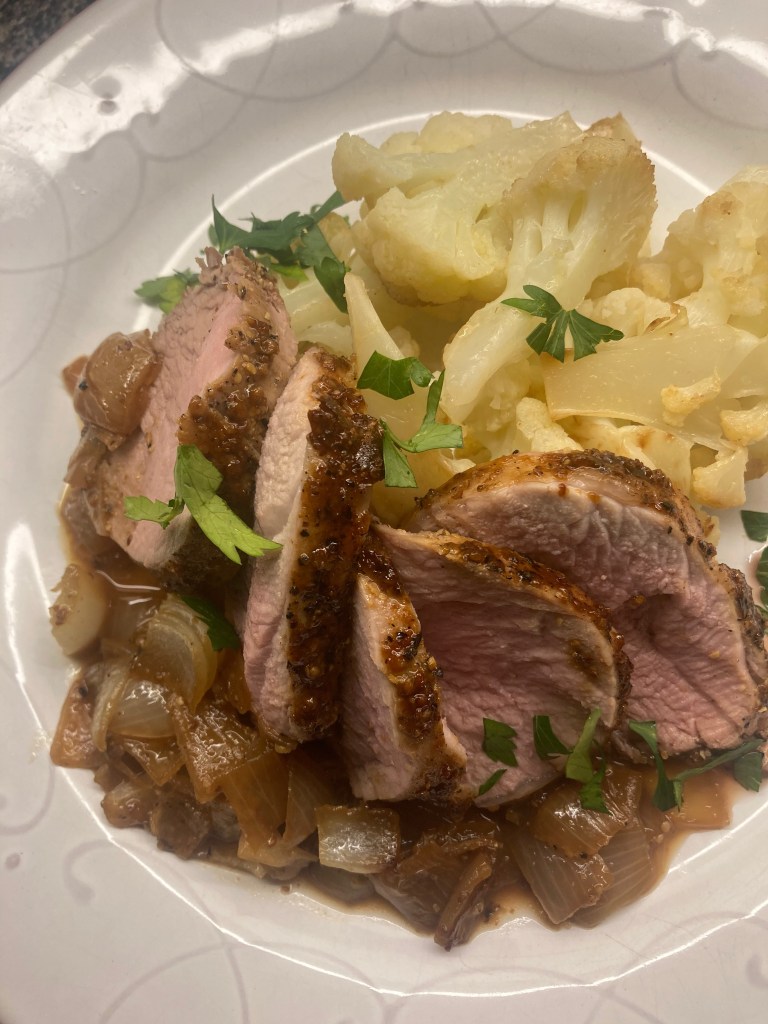
Or is it? Well, I’ve since found one undeniably good use for garlic powder – and it’s cauliflower. Pan-fried until golden brown, then adding a sprinkling of – dare I say it, garlic powder – with a tab of butter at the end. The result is quite sublime (if you can believe it). I would even go so far as to say it beats the real deal – the clove.

I’ve paired this unorthodox side-dish with pork tenderloin because it just seems to fit – two unsung heroes meet to align and reign. Especially in warmer months when you want to bypass mashed potatoes (That said, I would suggest a side of potato and celeriac mash for this recipe when the season calls). So… perhaps this recipe is part-advocacy and part-reparation for anyone who has dared to challenge her own Mom, inside or outside the kitchen. It’s a way of graciously saying: “*Maybe* you were right.” (Admission can be tough, I know.)

Here’s What You’ll Need for the Pork Tenderloin:

Serves 3-4

  • 1 ½ lb. pork tenderloin
  • 1 T olive oil
  • 1 T butter
  • 3 T grainy mustard
  • 2 T molasses
  • 1 medium onion, chopped (or 3 shallots, sliced)
  • About a ½ cup white wine
  • 1/2 cup water or chicken stock

Here’s What You’ll Need for the Cauliflower:

  • A head of cauliflower, chopped into medium-sized florets
  • About a cup of water
  • 1-2 T olive oil
  • 1 teaspoon garlic powder (you heard me)
  • 2 T of butter

Here’s How to Make Pork Tenderloin:

Preheat the oven to 400˚.

In a Large Skillet: Season the pork well. Add olive oil and butter to a hot pan. When hot (very hot) and ready, add your pork, and with tongs, sear all sides – about 2 minutes per side, turning to make sure each of the four sides is browned.

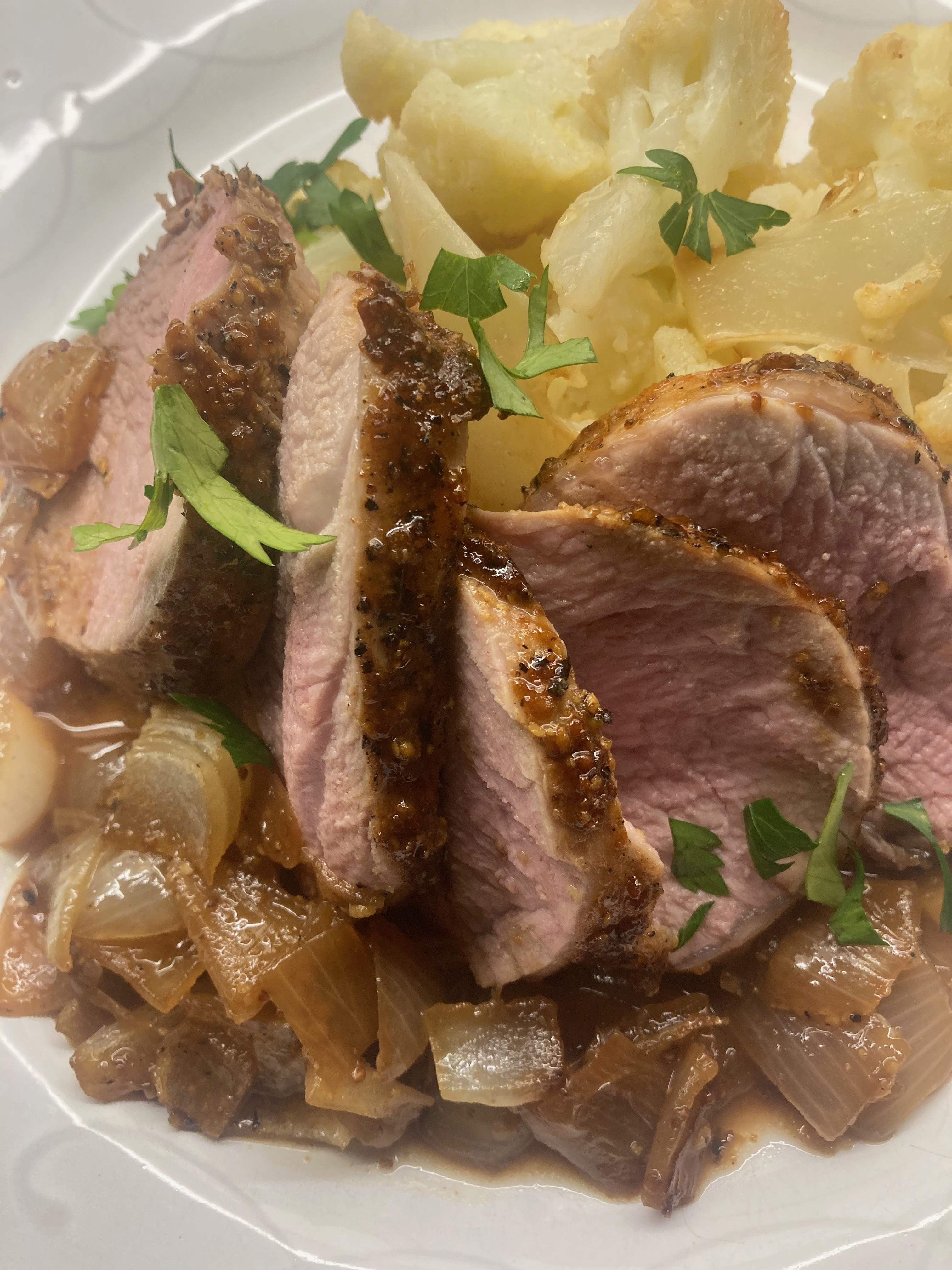
Transfer to the Oven: Just before transferring the pork to the oven, add the onions (or shallots), white wine and water (or chicken stock) to the skillet. Mix the glaze of grainy mustard and molasses and coat the top and sides of the pork with the glaze. Put into the oven, uncovered, for about 16-18 minutes (until desired temperature (150˚-ish = slightly pink).

Let it Rest: For about 10 minutes, uninterrupted.

Here’s How to Make the Seared Cauliflower:

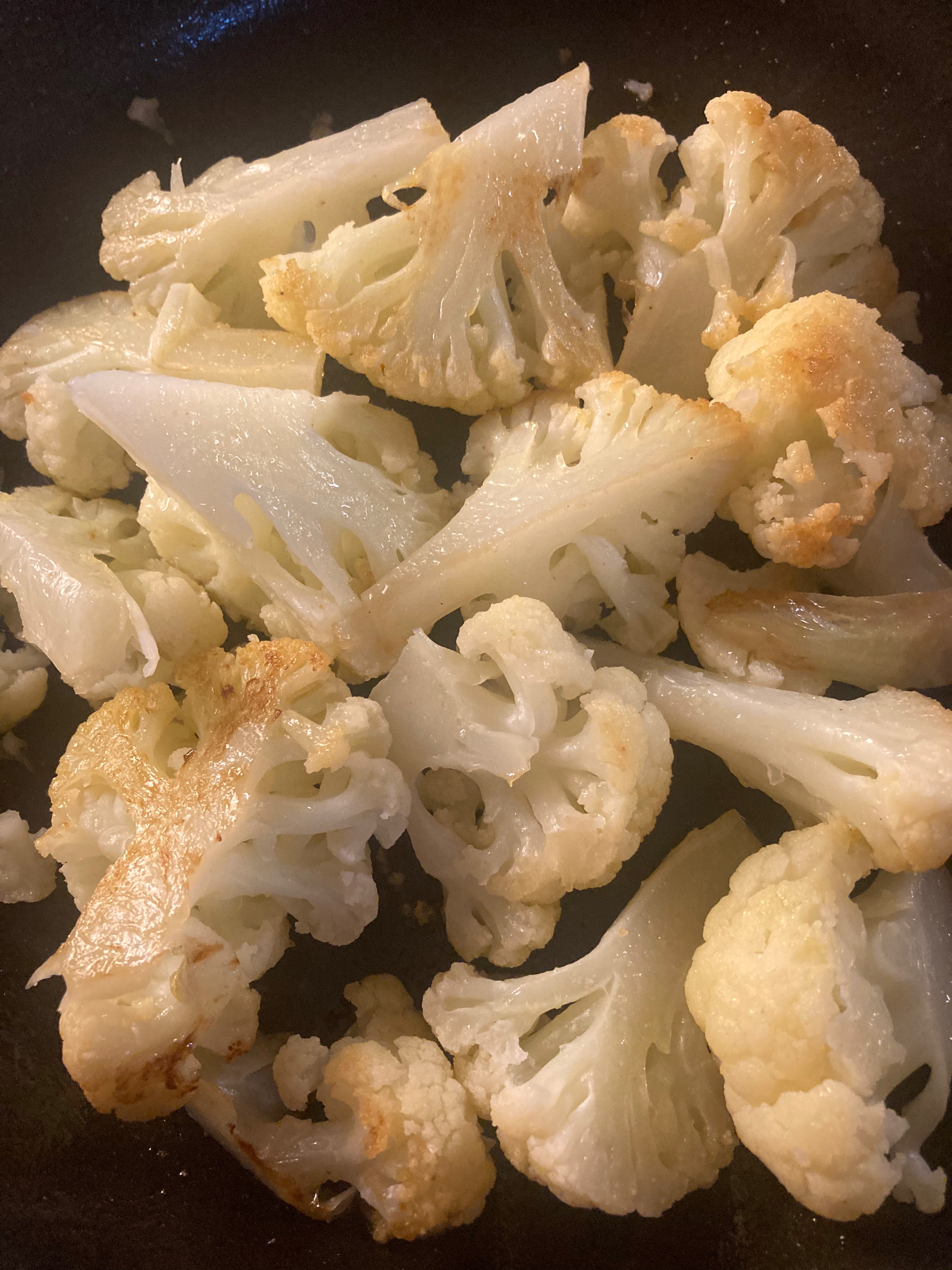
Cut the Cauliflower into Florets: Cut the cauliflower into medium sized florets. Place them in a deep skillet and add the water. Bring to a slight boil over medium-high heat. Cover and simmer over a medium-low heat for about 3 minutes. Check to see if they are tender crisp.

Allow the Water to Absorb: This is almost the equivalent of an absorption method in rice. Allow the water to absorb. If you find that the cauliflower is done to desired tender crisp, but there is still water in the pan, just drain it carefully. Then add the olive oil to the same skillet and move the florets around, allowing them to slightly brown over a higher heat. Then add the garlic powder, and butter. Toss them to incorporate and season well.

Tips & Troubleshooting:

For the Pork: If you don’t have molasses, you can use maple syrup. If you’re feeling herbal, you might also add a sprig of thyme. Also, gone are the days when we can’t have slightly pink pork. It depends on your taste, of course, but do not overcook it because you think it needs to be grey. It doesn’t. Lastly, if you find the liquid has all but absorbed by the time you take the pork out of the oven, and the pork is done, set the pork aside to rest and add a bit of chicken stock or water (or wine) to the pan to create a jus.This just means placing the pan back on a burner on a medium to high heat for a minute or so to reconstitute the onions in the pan and to create a kind of gravy.

For the Cauliflower: Don’t overcook it! Check to see if it’s tender crisp and drain any excess water before pan-frying. Overcooked cauliflower is not a good outfit. I say “3 minutes” here because I cut my florets pretty large. If you like to cut smaller, adjust the steaming time.

Serve up and enjoy!