Eggplant and Sausage Panzerotti

HOW TO MAKE EGGPLANT AND SAUSAGE PANZEROTTI

I give this recipe weekend status not because it’s terribly time-intensive. But simply because anything involving dough or pastry usually involves more time than we can give mid-week.

Weekday or weekend, I still recommend purchasing a good-quality prepared pizza dough from your local market. I say this not because you can’t make a fantastic dough on your own (and you can!) but because it adds unnecessary time. Good quality pizza dough can be found easily. No need to take time proofing your own dough – unless, of course, you’d like to!

You’ll need to pull out your prepared dough from the fridge about 20 minutes before using it in order to bring it to room temperature and to make it pliable.

HERE’S WHAT YOU’LL NEED:

Servings: 2 (assuming 2 panzerotti per person)

1 250g pizza dough (store bought), at room temperature

1 eggplant, diced into 1.5” pieces

5-6 cloves garlic

2 T olive oil

½ teaspoon dried oregano

salt & pepper

¾ cup (200g) pizza mozzarella, shredded (or fresh mozzarella, cubed)

2 Italian sausages, casings removed, and cut into 1” balls

1-1.5 cups marinara sauce

olive oil for brushing

white flour for dusting the dough

HERE’S HOW TO MAKE EGGPLANT SAUSAGE PANZEROTTI:

Prep your marinara: If you’re making your own marinara sauce, do this first. If you’re using my marinara sauce recipe, simply swap out the ground beef for the two Italian sausages. Remove casings on the sausages, break the meat down into 1” bits, sauté them, and then proceed with the marinara recipe (see my Eggplant Parmesan recipe). If you’re using jarred marinara sauce, simply sauté the sausage bits for about 3-4 minutes, then add about a cup and a half of jarred sauce to warm it.

Prep the eggplant for roasting: Cut the eggplant into 1.5” cubes. In a large roasting pan, toss the eggplant with garlic cloves, olive oil, oregano, and season well. Roast for about 30 minutes in the oven at 400˚F.

Combine the Eggplant and Marinara: When the eggplant has finished roasting, combine it with the sausage and marinara sauce.

Roll out your dough: Assuming your dough has been out of the fridge for about 20 minutes, cut it into quarters. Take each quarter and roll it into a ball, then work each quarter into a small circle, about 5” in diameter. Use flour to dust the dough to make it pliable and less sticky. Roll it out to about ¼” inch thick.

Fill the dough: Take each circle of dough and fill the right half with a scoop of eggplant/sausage mixture, top it with about a tablespoon of shredded cheese, and then seal the envelope of dough by turning the left side over to the right side to create a crescent shape. Seal the edges by pinching them and using a little water to seal any gaps.

Bake for about 14 minutes at 400F: Bake until the dough looks golden brown, about 14 minutes. Remember, both your eggplant and your marinara are cooked. The baking process in simply to melt the cheese, combine flavors, and bake the dough. Serve a panzerotto or two to each person.

TIPS AND TROUBLESHOOTING:

Be careful with liquid amounts in the filling: I use a slotted spoon when adding the eggplant/sausage/marinara mixture to the dough in order to control the liquid (i.e. the marinara). If you add too much sauce, this can break the seal of your pastry when baking. While liquid leaking from your pastry doesn’t affect flavor, it affects appearance – so…if you’re entertaining and making lots of these, you’ll want to be a bit careful!
EASY BOEUF BOURGUIGNON RECIPE

Here’s how to make Easy Boeuf Bourguignon

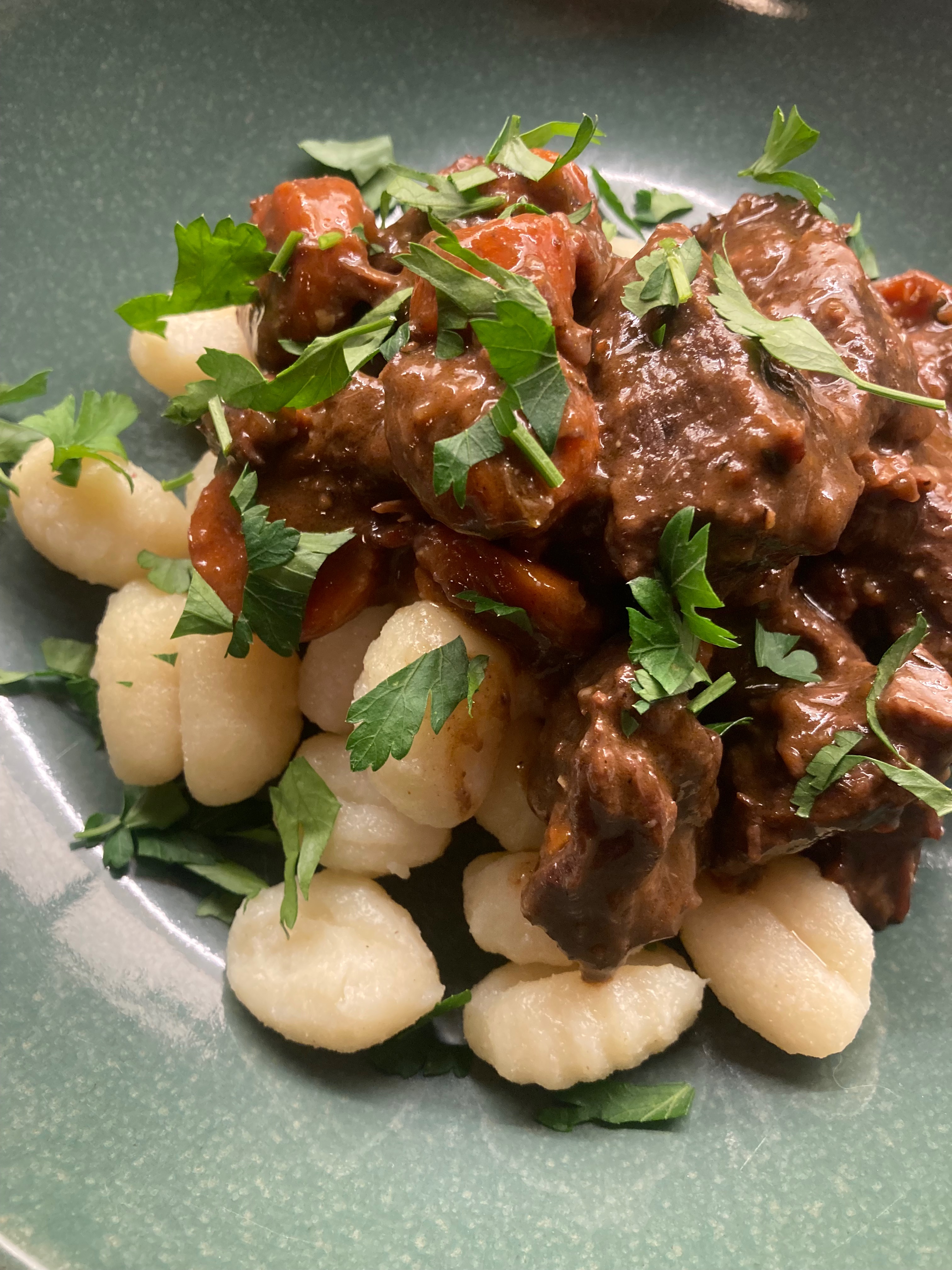
I have this love/hate relationship with Boeuf Bourguignon. Probably because I’ve never bought into the fuss with the classic Julia Child / French recipe. It’s a bit “much ado” in my opinion. However, not about nothing. But I think I’ve cracked it – a super tasty recipe, but a lot simpler than the traditional French recipe (or Ms. Child’s). And I’ve even paired it with gnocchi (instead of the traditional mashed potatoes) – sacrilege, I know!

You’ll also notice that I bypass the pearl onions altogether (which are traditional in this recipe) – not worth the time in my opinion.

IF you love mushrooms – make them separately and add them in after. You can also bypass the mushrooms (okay, I know, I’m fired!).

Ready to make Easy Boeuf Bourguignon?

Here’s what you’ll need:

Servings: 4

  • 3 T olive oil
  • 2 slices of good quality smoked bacon, cut into ¼ -inch slices
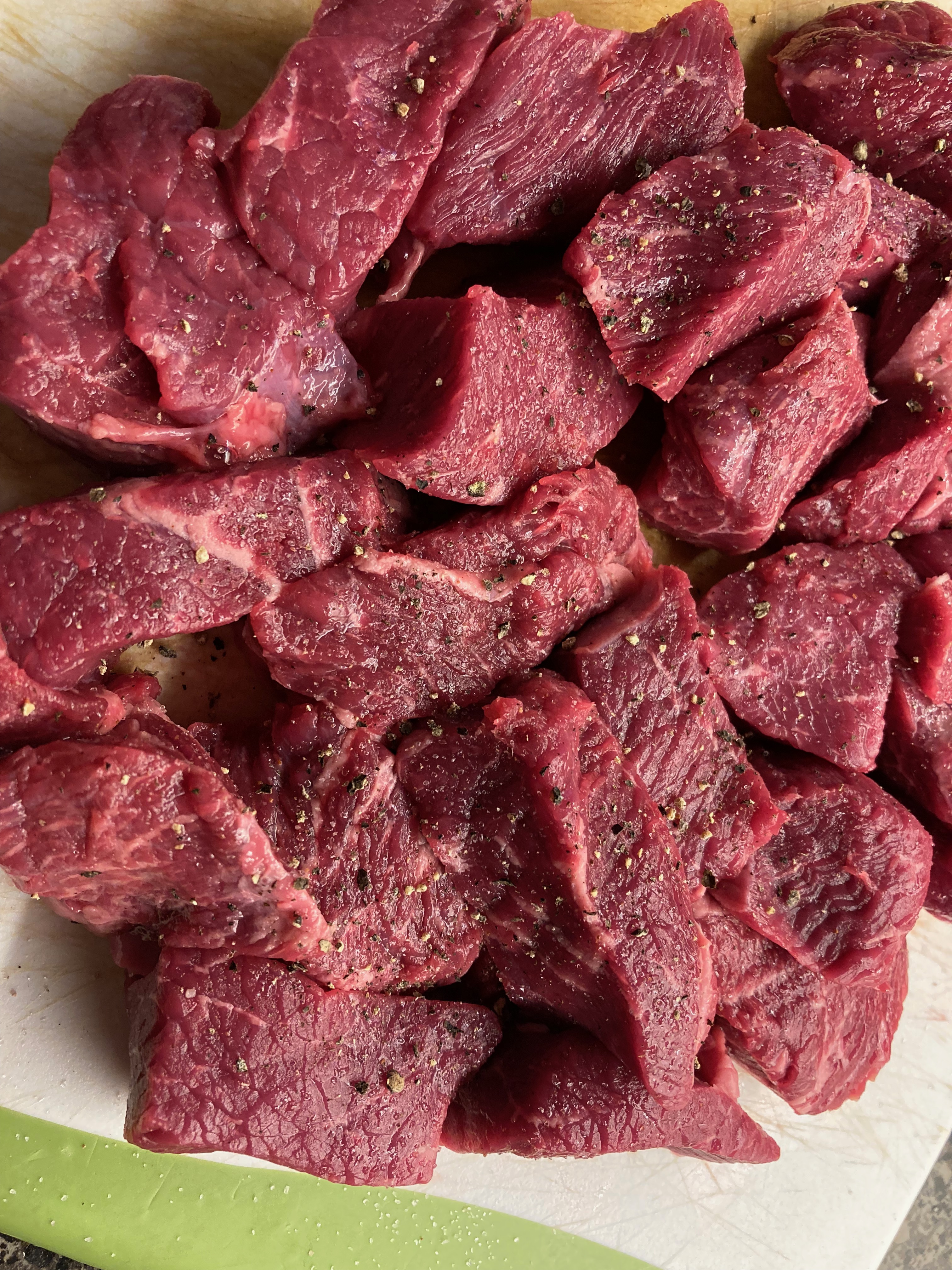
  • 2 lbs. sirloin tip roast beef, cut into 2-3-inch chunks (or any stewing beef, like chuck)
  • 3 large shallots, sliced (or one medium white onion, diced or chopped)
  • 2 large carrots, sliced into ½-inch slices
  • 3 cloves of garlic
  • 1 T tomato paste
  • 1 T white flour
  • 3 cups red wine (recommend: Pinot Noir)
  • 1 ½ cups beef broth (or warm water mixed with 1 cube of beef bouillon)
  • Spring of fresh thyme
  • Salt & pepper
  • 250 g gnocchi (1 package)
  • Fresh Italian parsley or basil, for garnish
  • Plain yogurt (optional)

For the mushroom folks:

  • 450 g cremini mushrooms, halved or quartered
  • 2 T olive oil
  • 1-2 T butter
  • 2 cloves garlic, crushed
  • Salt & pepper

Here’s how to make Easy Boeuf Bourguignon

Pre-heat your oven to 325F.

Prep your beef. If you’re using a sirloin tip roast that hasn’t yet been cut down, cut it into 2-3” squares. If you’re using pre-prepped stewing beef, it’s good to go. Season the beef.

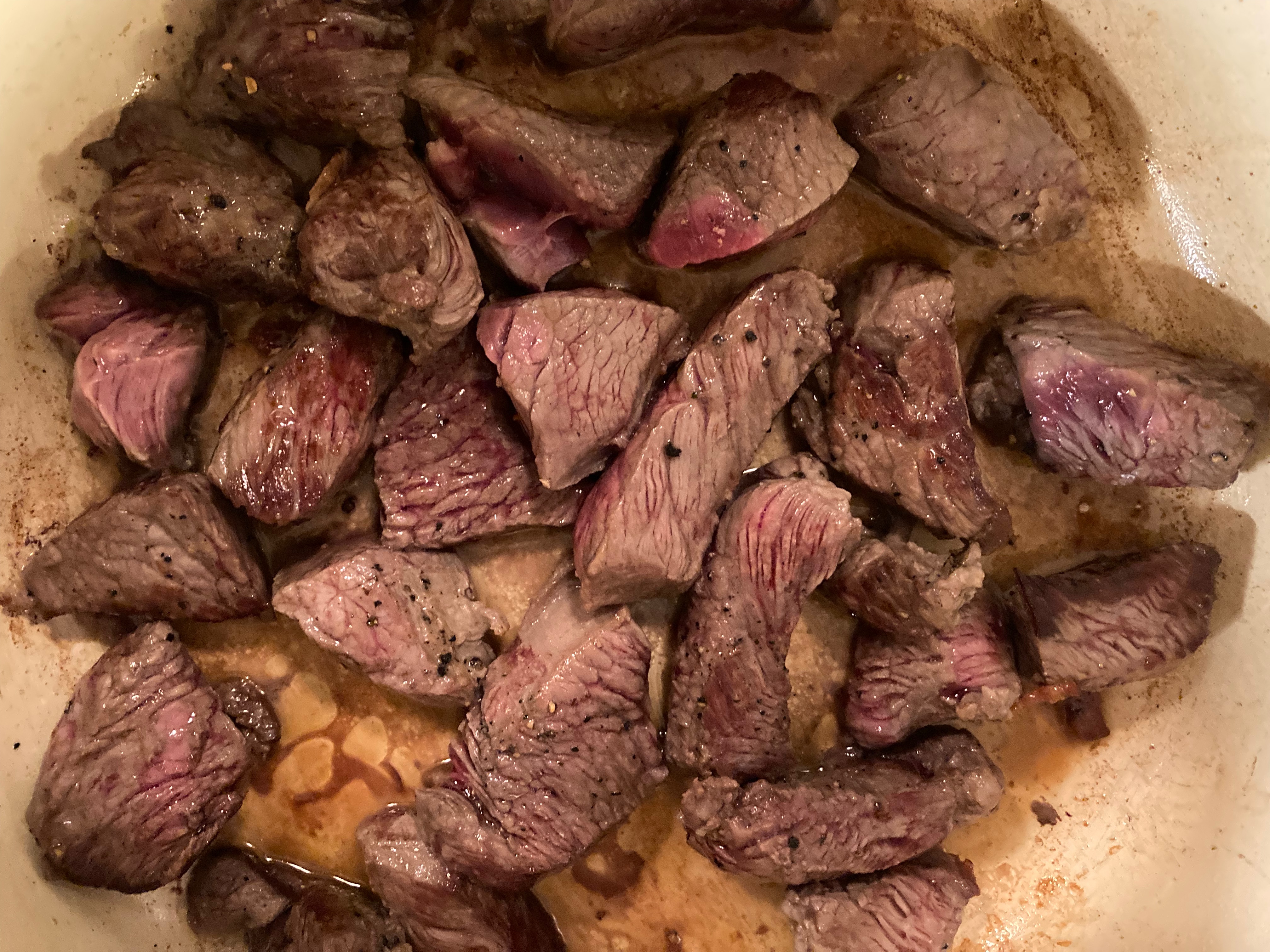
Heat the Dutch oven: Heat the olive oil a medium-high heat, add the bacon and render it down to release the fats and make it crisp. Remove the bacon rind and set aside. Add the seasoned beef chunks to the same pot and sear on both sides until browned – about 2 minutes per side. Remove the beef from the pot and set aside.

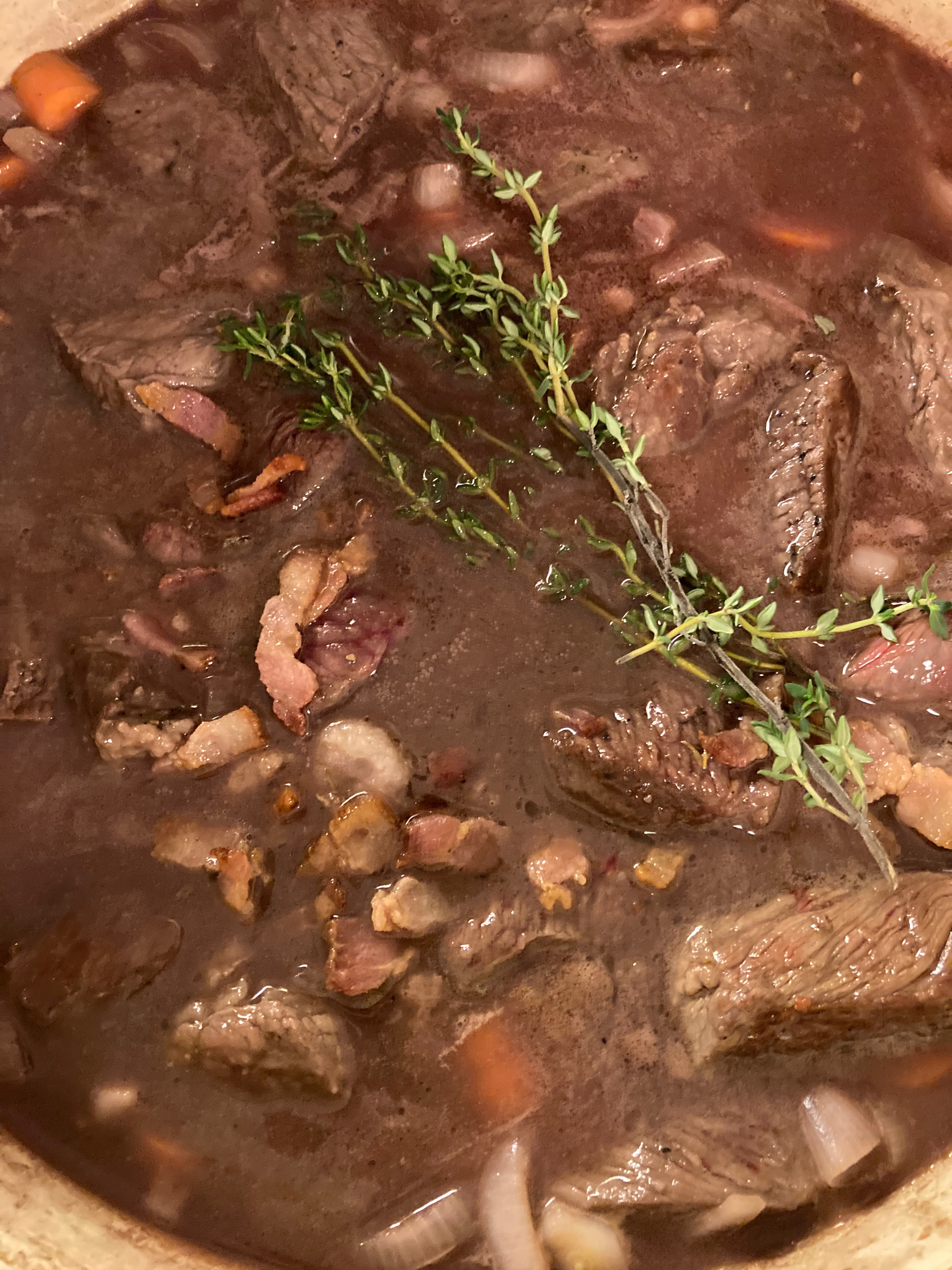
Add your aromatics: Add the sliced shallots to the same pot, move them around for about 1-2 minutes. Add the carrots. Move them around for about a minute. Add the garlic. Add the flour and incorporate it into the onion/carrot/garlic mixture, which will slightly thicken it. Add the red wine and beef stock (or water plus bouillon cube). Allow it to come to a simmer. Add the tomato paste and whisk it in. Then add the beef and bacon back into the pot. The liquid should just cover the beef. Add a sprig of fresh thyme.

Put it into the oven for braising: Cover the pot and put it into the oven on a low heat (325F) for about 2 ½ hours.

In the meantime: If you’d like to add mushrooms to the final dish, cook them separately about a half hour before the end of the beef cooking time: Heat olive oil and butter on a medium high heat. Add garlic and cook for about a minute. Add the mushrooms, season, and keep moving them around until their water is released and they start to settle. (Mushrooms contain a lot of water that gets released in cooking. Just render them out for a couple minutes). Set aside until the beef is done, and then add to the beef before serving.

Serving sides: Mashed potatoes or gnocchi? I quite like gnocchi for this recipe, but, by all means, serve with a mash if you prefer. For the gnocchi, simply cook about 3 minutes according to the package instructions, and serve the boeuf bourguignon on top, with a bit of fresh Italian parsley, or even basil, as garnish.

Tips and Troubleshooting:

Cuts of Beef: I personally prefer sirloin tip because it’s a slightly higher-grade beef than typical chuck roast (or stewing beef). However, both work for this dish. The sirloin tip is slightly less fatty, as it’s cut from the hindquarters unlike chuck beef which is cut from the shoulder. Also, chuck is tougher than sirloin tip, which means you might need to add extra time to the braising to achieve desired tenderness. Sirloin tip gets tender within the 2 ½ hour time-frame prescribed in this recipe.

Bring Me the Bacon: I recommend smoked bacon for this recipe. Just make sure your smoked bacon is not “maple-smoked” as this adds a level of sweetness that I don’t recommend for this dish.

Shallots vs. White Onion: This is a matter of preference. I like shallots for this recipe as they lend a nice balance of sharpness and sweetness. However, white onion works just as well – it’s simply milder in flavor. I’m a firm believer in using what’s at hand, so check your pantry. Don’t go buying shallots if you have a nice white onion, in other words. Not worth the time, effort and extra money.

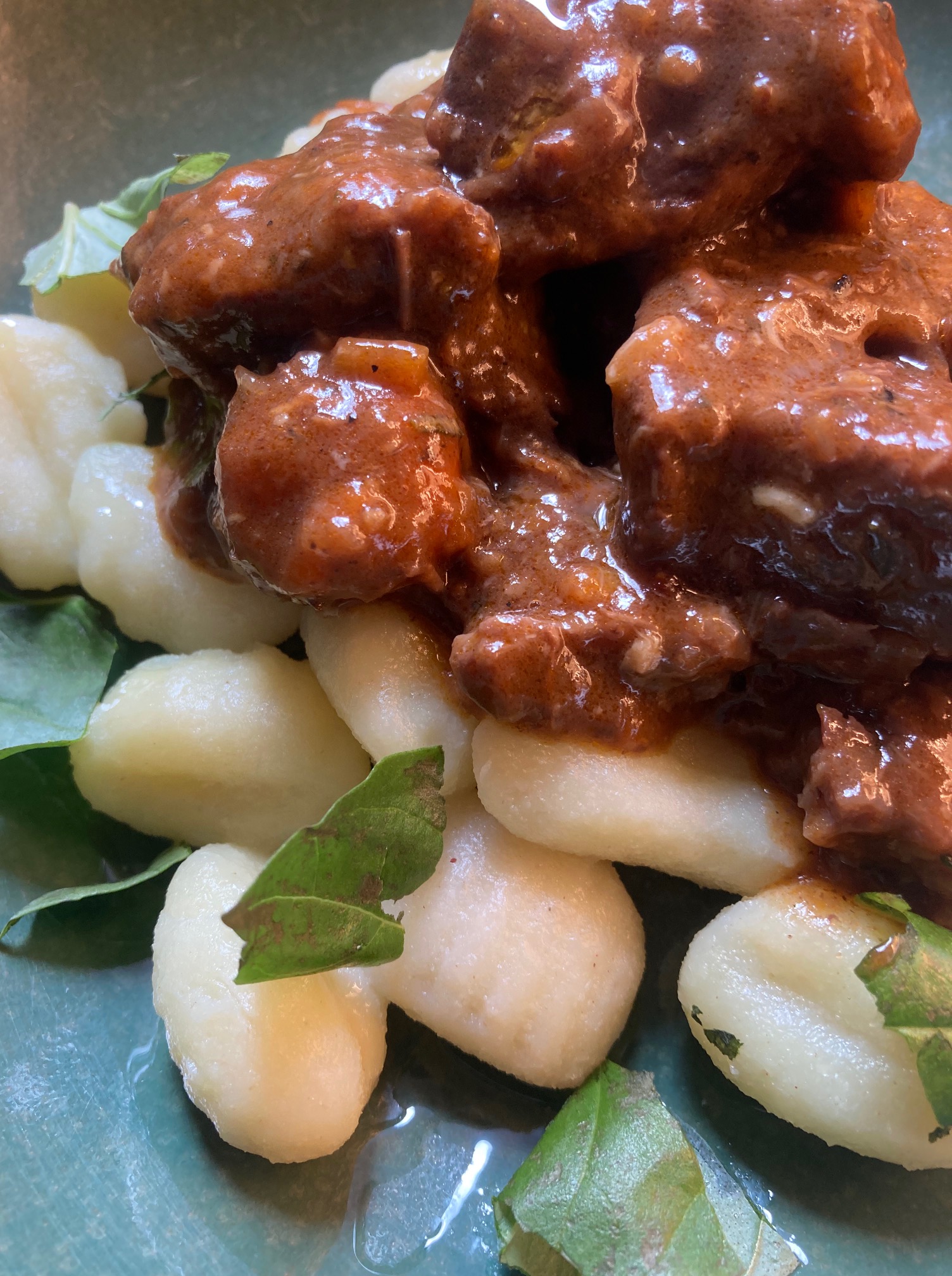
Which Red Wine Do I Choose? Julia Child recommended a Burgundy wine for this recipe. This basically means a Pinot Noir – ideally from Burgundy, France (as opposed to a California Pinot).  While this is not strict advice to follow, I’ll tell why it’s good advice. French Burgundies are medium-bodied, intensely fragrant wines with a fruity, elegant palate (think: cherries), with highish acidity and low levels of tannins. This wine works well in this recipe to mediate the richness of the sauce. A fuller-bodied red wine, such as a Bordeaux, or an Italian Primitivo, for example, will work, but will yield a very rich sauce due to the added body of the wine. I’ve found this result a bit over the top in richness and suggest adding plain yogurt as a garnish, if you choose such a full-bodied wine (see image below).