EASY BOEUF BOURGUIGNON RECIPE

Here’s how to make Easy Boeuf Bourguignon
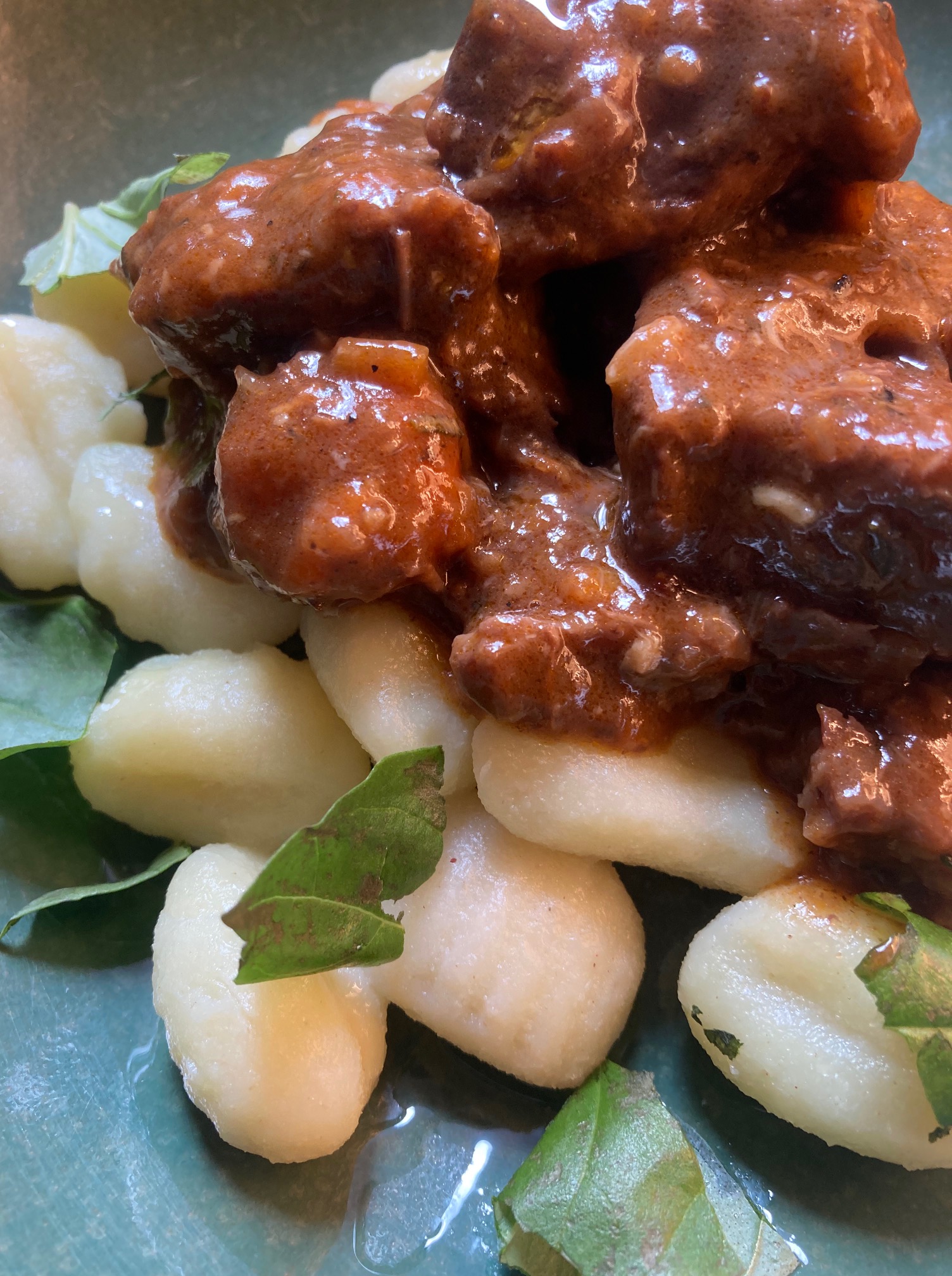
I have this love/hate relationship with Boeuf Bourguignon. Probably because I’ve never bought into the fuss with the classic Julia Child / French recipe. It’s a bit “much ado” in my opinion. However, not about nothing. But I think I’ve cracked it – a super tasty recipe, but a lot simpler than the traditional French recipe (or Ms. Child’s). And I’ve even paired it with gnocchi (instead of the traditional mashed potatoes) – sacrilege, I know!

You’ll also notice that I bypass the pearl onions altogether (which are traditional in this recipe) – not worth the time in my opinion.

IF you love mushrooms – make them separately and add them in after. You can also bypass the mushrooms (okay, I know, I’m fired!).

Ready to make Easy Boeuf Bourguignon?

Here’s what you’ll need:

Servings: 4

  • 3 T olive oil
  • 2 slices of good quality smoked bacon, cut into ¼ -inch slices
  • 2 lbs. sirloin tip roast beef, cut into 2-3-inch chunks (or any stewing beef, like chuck)
  • 3 large shallots, sliced (or one medium white onion, diced or chopped)
  • 2 large carrots, sliced into ½-inch slices
  • 3 cloves of garlic
  • 1 T tomato paste
  • 1 T white flour
  • 3 cups red wine (recommend: Pinot Noir)
  • 1 ½ cups beef broth (or warm water mixed with 1 cube of beef bouillon)
  • Spring of fresh thyme
  • Salt & pepper
  • 250 g gnocchi (1 package)
  • Fresh Italian parsley or basil, for garnish
  • Plain yogurt (optional)

For the mushroom folks:

  • 450 g cremini mushrooms, halved or quartered
  • 2 T olive oil
  • 1-2 T butter
  • 2 cloves garlic, crushed
  • Salt & pepper

Here’s how to make Easy Boeuf Bourguignon

Pre-heat your oven to 325F.

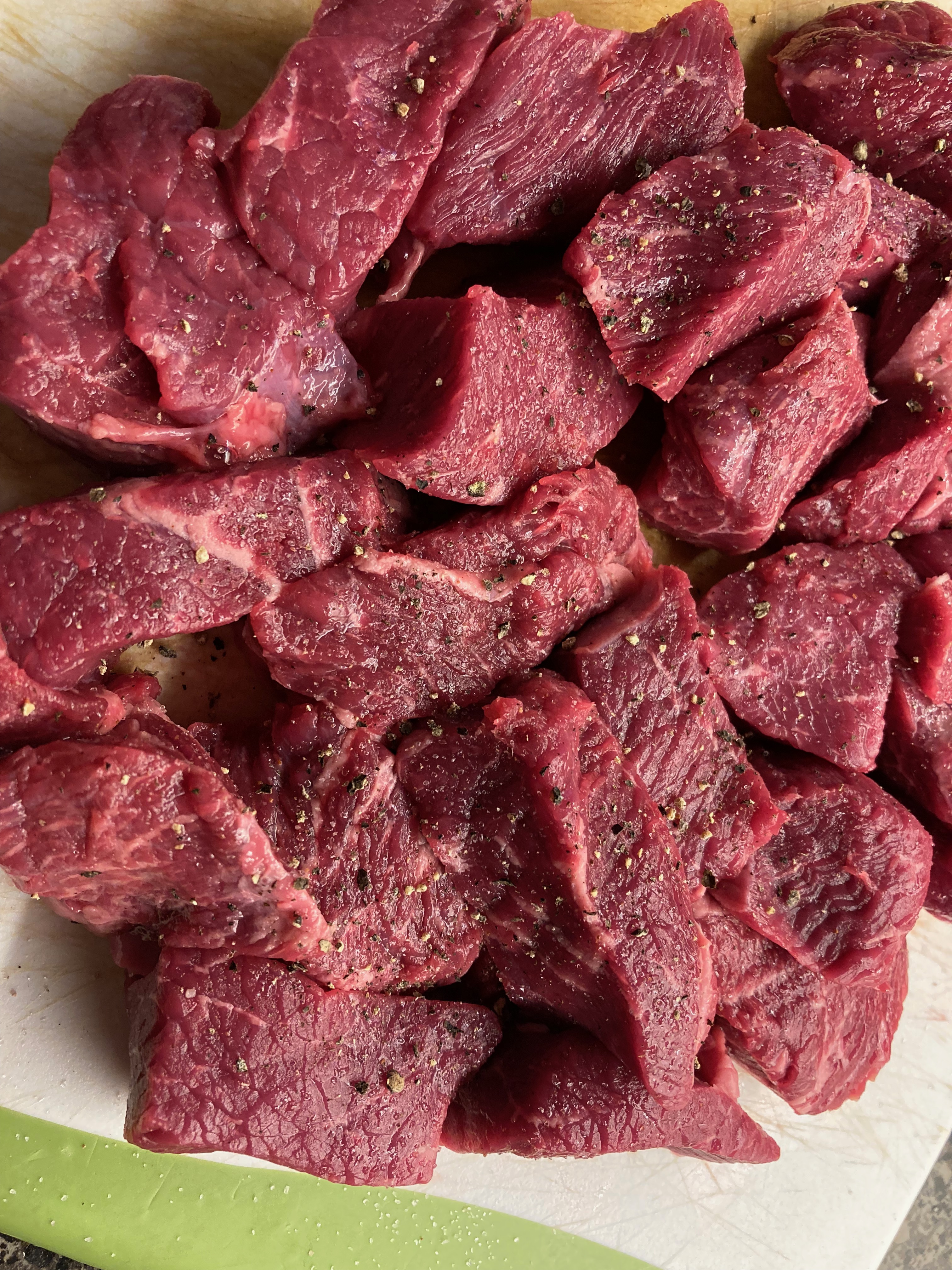
Prep your beef. If you’re using a sirloin tip roast that hasn’t yet been cut down, cut it into 2-3” squares. If you’re using pre-prepped stewing beef, it’s good to go. Season the beef.

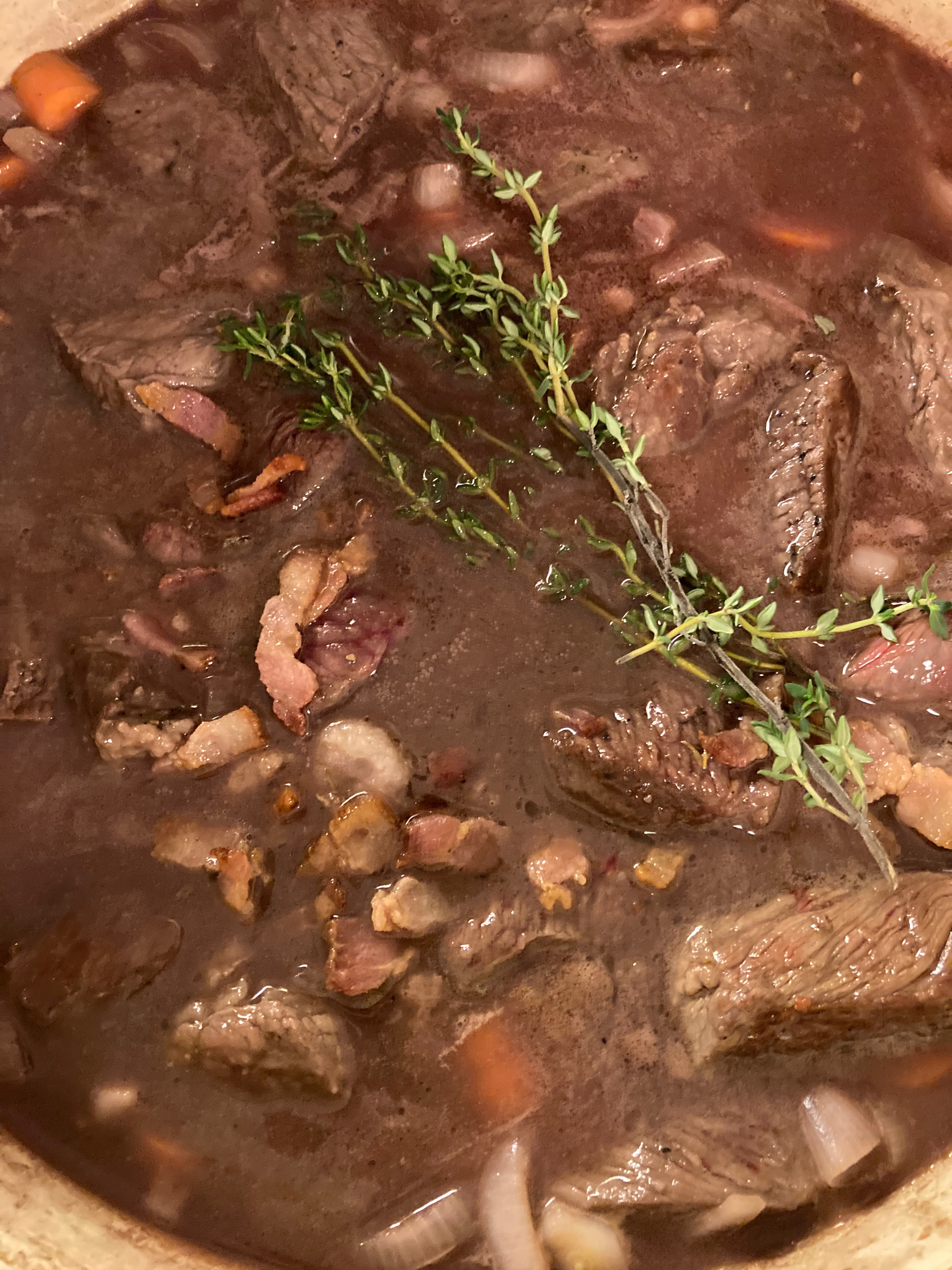
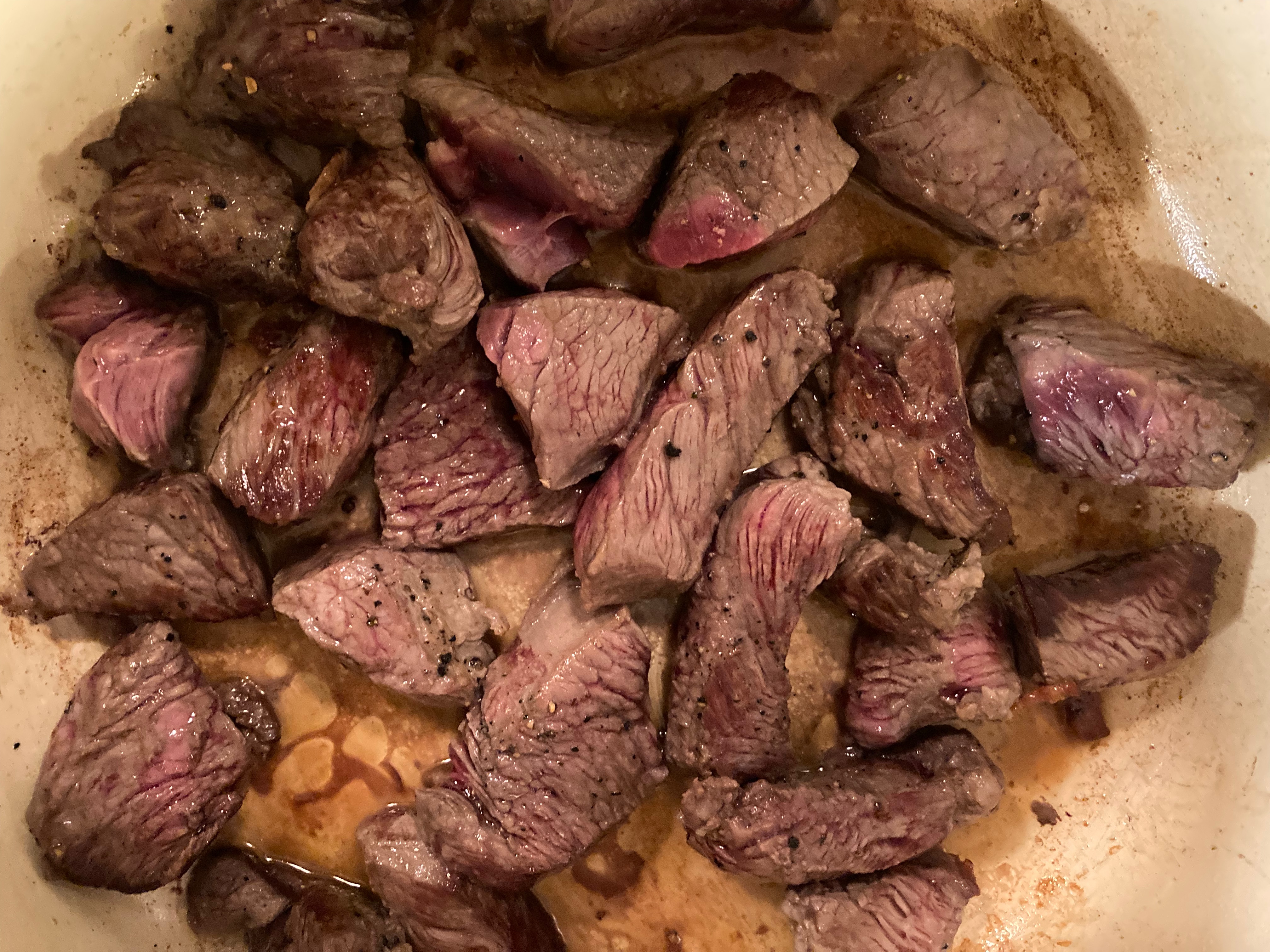
Heat the Dutch oven: Heat the olive oil a medium-high heat, add the bacon and render it down to release the fats and make it crisp. Remove the bacon rind and set aside. Add the seasoned beef chunks to the same pot and sear on both sides until browned – about 2 minutes per side. Remove the beef from the pot and set aside.

Add your aromatics: Add the sliced shallots to the same pot, move them around for about 1-2 minutes. Add the carrots. Move them around for about a minute. Add the garlic. Add the flour and incorporate it into the onion/carrot/garlic mixture, which will slightly thicken it. Add the red wine and beef stock (or water plus bouillon cube). Allow it to come to a simmer. Add the tomato paste and whisk it in. Then add the beef and bacon back into the pot. The liquid should just cover the beef. Add a sprig of fresh thyme.

Put it into the oven for braising: Cover the pot and put it into the oven on a low heat (325F) for about 2 ½ hours.

In the meantime: If you’d like to add mushrooms to the final dish, cook them separately about a half hour before the end of the beef cooking time: Heat olive oil and butter on a medium high heat. Add garlic and cook for about a minute. Add the mushrooms, season, and keep moving them around until their water is released and they start to settle. (Mushrooms contain a lot of water that gets released in cooking. Just render them out for a couple minutes). Set aside until the beef is done, and then add to the beef before serving.

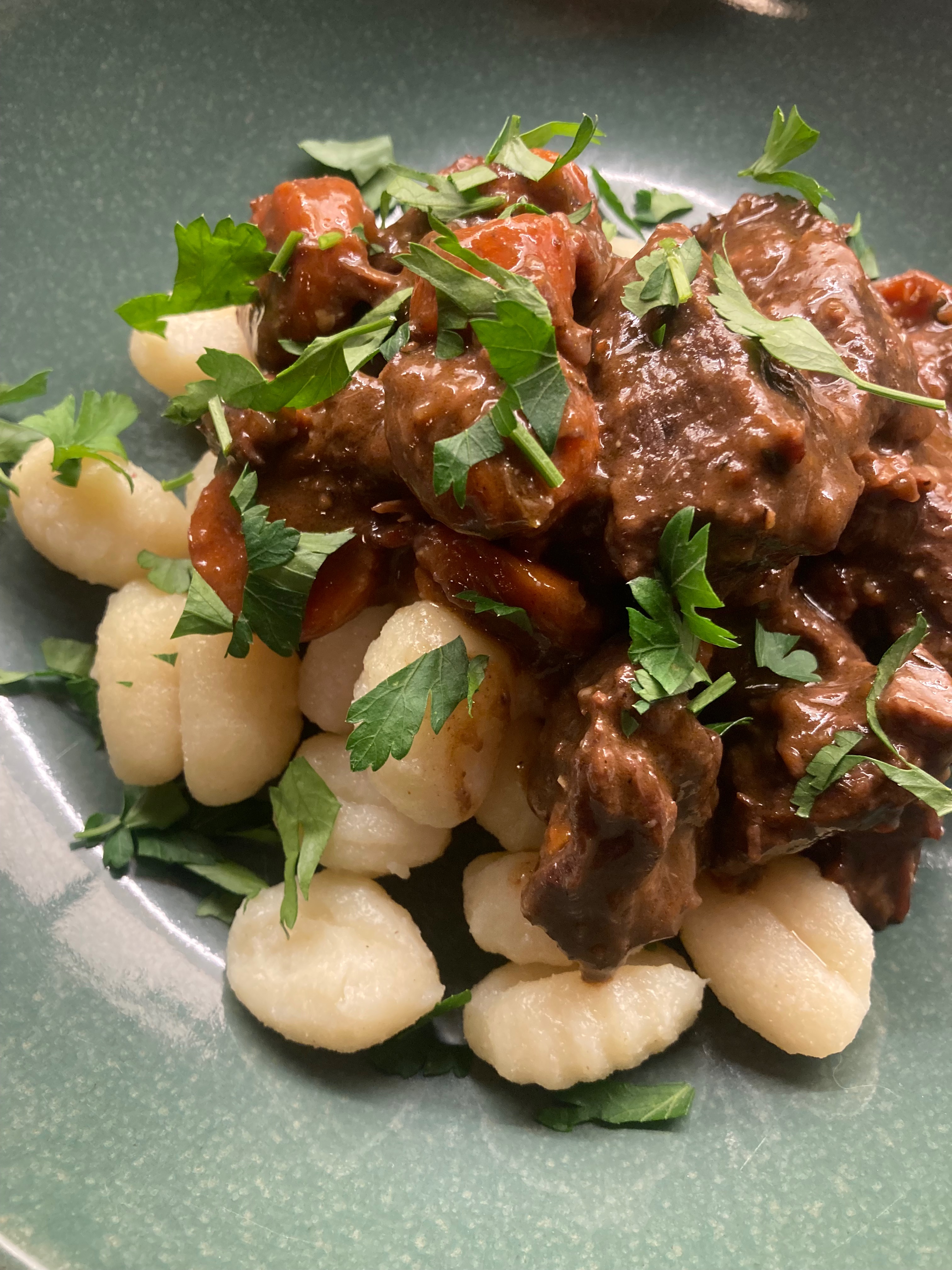
Serving sides: Mashed potatoes or gnocchi? I quite like gnocchi for this recipe, but, by all means, serve with a mash if you prefer. For the gnocchi, simply cook about 3 minutes according to the package instructions, and serve the boeuf bourguignon on top, with a bit of fresh Italian parsley, or even basil, as garnish.
Tips and Troubleshooting:

Cuts of Beef: I personally prefer sirloin tip because it’s a slightly higher-grade beef than typical chuck roast (or stewing beef). However, both work for this dish. The sirloin tip is slightly less fatty, as it’s cut from the hindquarters unlike chuck beef which is cut from the shoulder. Also, chuck is tougher than sirloin tip, which means you might need to add extra time to the braising to achieve desired tenderness. Sirloin tip gets tender within the 2 ½ hour time-frame prescribed in this recipe.

Bring Me the Bacon: I recommend smoked bacon for this recipe. Just make sure your smoked bacon is not “maple-smoked” as this adds a level of sweetness that I don’t recommend for this dish.

Shallots vs. White Onion: This is a matter of preference. I like shallots for this recipe as they lend a nice balance of sharpness and sweetness. However, white onion works just as well – it’s simply milder in flavor. I’m a firm believer in using what’s at hand, so check your pantry. Don’t go buying shallots if you have a nice white onion, in other words. Not worth the time, effort and extra money.

Which Red Wine Do I Choose? Julia Child recommended a Burgundy wine for this recipe. This basically means a Pinot Noir – ideally from Burgundy, France (as opposed to a California Pinot).  While this is not strict advice to follow, I’ll tell why it’s good advice. French Burgundies are medium-bodied, intensely fragrant wines with a fruity, elegant palate (think: cherries), with highish acidity and low levels of tannins. This wine works well in this recipe to mediate the richness of the sauce. A fuller-bodied red wine, such as a Bordeaux, or an Italian Primitivo, for example, will work, but will yield a very rich sauce due to the added body of the wine. I’ve found this result a bit over the top in richness and suggest adding plain yogurt as a garnish, if you choose such a full-bodied wine (see image below).

Seafood Sleuths

Oceana Is Back with Another Report On Canada’s Fish Fraud Scandal

“Think you know the whole story about your seafood? Think again.”

These provocative words open Oceana Canada’s new campaign video, posted on YouTube on the heels of their most recent investigative study of Canada’s fish fraud dilemma. The video, which is part public-service-announcement and part call-to-action, exposes the Canadian government’s broken promises to remedy the nation’s on-going fish fraud issue and calls on members of the public to join the effort to demand government action.

Fish fraud is not a new concern. Oceana Canada has been tracking this issue nation-wide since 2017. In their 2017-18 study, researchers found that 44 per cent of the 400 samples of fish tested across five major Canadian cities were mislabeled. A year later, they conducted a Montreal-specific study which showed that a whopping 61 per cent of fish samples were either a substituted species or didn’t meet the labelling requirements set by the Canadian Food Inspection Agency (CFIA).

Oceana’s most recent report, published this month, covers their research from earlier this year across four major Canadian cities – Toronto, Montreal, Ottawa and Halifax. Researchers tested 94 seafood samples from grocery stores and restaurants to find 46 per cent were mislabelled – a finding consistent with their 2018 report.

So why has the Canadian government been sluggish in dealing with this problem?

Governments are notoriously not the swiftest actors. Add in a pandemic, and they’re likely working at glacial speed. But there’s another factor at play: CFIA conducted their own study on fish fraud between 2019 and 2020. They surveyed 362 samples of fish across Canada and revealed a 92 per cent accuracy rate in labeling of all fish varieties sampled.

The discrepancy between CFIA’s 8 per cent margin of error and Oceana’s 44 to 46 per cent is not a small margin, particularly considering the studies were done within two years of each other.

In fact, the discrepancy demands scrutiny. A closer examination of the research design of each study offers insight. One theory might be that each study sampled different varieties of fish which yielded widely divergent results. But this is not the case. The CFIA studied nine types of fish: butterfish, cod, halibut, sea bass, snapper (red and other), sole, tuna, yellowtail, and kingfish. The Oceana study also sampled nine varieties: butterfish, cod, halibut, sea bass, snapper, sole, tuna, yellowtail and salmon. In other words, all fish varieties matched between the two studies with the exception of CFIA choosing kingfish, while Oceana chose salmon instead. And while we might wonder if the prevalence of salmon in market consumption might explain the skewed results, it doesn’t. Salmon ranked least likely to be mislabeled in the Oceana study with a mislabeling rate of 18 per cent.

If a difference in fish varieties sampled doesn’t explain the discrepancy in each study’s results, what does?

Here’s one theory. The CFIA inspectors collected fish samples from domestic processors, importers and retailers (fish packaged at retail). Restaurants were excluded as a source of fish samples. This omission is significant because the Oceana study revealed that restaurants were one of the biggest offenders when it comes to mislabeling – more than half of the restaurant samples tested were mislabeled. By removing restaurants from the list of sources, the CFIA report might be falsely reassuring.

Conversely, according to Oceana, at food retailers, including grocery stores and markets, the rate of mislabeling was 22 per cent. While not effectively aligning with the CFIA results, the lower rate of mislabeling at retailers in the Oceana study does bring us closer than at first glance to a comparable result between the two agency’s studies, if we remove restaurants from the equation.

Anyone familiar with food writer Laura Reiley’s investigative report of food fraud, including fish fraud, in the Tampa Bay area will understand the significance of omitting restaurants from any study purporting to detect food fraud. Reiley states from the outset of her article: “I’ve been had, from the snapper down to the beef.”

Her stellar journalism backs up that statement. She rightly identifies the allure of the promises of “buying local” or “sustainable sourcing” in the marketing of restaurants. And she put to task the all-too-frequent claims made by restaurants in the Tampa area. Most fell short of their claims. The problem she expertly identifies is: “Buying local” and “sustainable sourcing” are too often convenient fictions, used by restauranteurs hoping to increase their customer base – and bottom line.

Taking a cue from Reiley’s reporting, as well as Oceana’s multi-year studies, it seems crucial to include restaurants in any study on fish fraud in order to capture accurately the big picture.

And why should we care so much about fish fraud? For a few reasons. Fish fraud affects your pocketbook, your health, and the public’s trust in our food systems and the regulations therein. Ordering grouper and getting tilapia creates a price differential. Tilapia is a cheaper fish. Ordering wild-caught fish and getting farmed presents a potential health challenge you didn’t bargain for. Oceana points out another consequence of poor traceability in their most recent report: Canada’s contribution to and losses from illegal, unreported and unregulated fishing around the world. Their report found that Canada is losing millions of dollars each year because of “opaque seafood supply chains.”

But perhaps most importantly, proper labeling and an absence of misrepresentation in food products goes a long way in building the public’s trust. If the Government of Canada wants to ensure the public’s trust in its food regulatory provisions, including the tracing of food origins, quality and safety, the presence of misrepresentation of products such as fish undermines that trust.

According to market research conducted by Abacus Data for Oceana Canada earlier this year, 87 per cent of Canadians are concerned about purchasing seafood that is mislabeled, up 11 points from 76 per cent in December 2020. Moreover, 86 per cent are concerned about the Government’s lack of action in addressing seafood mislabeling and illegal fishing in Canada.

So what is the Government doing about all this?

In 2019, Canadian prime minister Justin Trudeau issued a mandate letter to the health minister to develop a boat-to-plate traceability program. This mandate has turned into a multi-department initiative, with the CFIA identified as the lead, working with Agriculture and Agri-food Canada (AAFC), and Fisheries and Oceans Canada (DFO).

According to a CFIA spokesperson, CFIA, DFO, and AAFC have “actively engaged with a broad range of stakeholders, such as industry and industry associations, non-government organizations, academia, and Federal and provincial partners, to gather perspectives on measures to fulfill the mandate commitment.” A joint discussion paper, on behalf of all three organizations, is supposed to be published this Summer. For Oceana, this is seemingly not soon enough. And summer is winding down.

When asked if “industry stakeholders” include restauranteurs, CFIA offered this: “Industry stakeholders include all players in the seafood supply chain and, as such, the restaurant industry.”

This inclusion bodes well in terms of filling in the gaps between the Oceana and CFIA studies. Stakeholders and consumers alike eagerly await the results and recommendations of this initiative. Whether or not this discussion paper will call out the need to focus the lens more tightly on restaurant compliance with product labeling, however, remains to be seen. One thing is for certain: if it does not, or if these government agencies continue to drag their feet on implementing a robust boat-to-plate traceability program, Oceana Canada will be knocking loudly at their doors – along with the 87 per cent of concerned Canadians.

This article was originally published in August 2021.

COTTAGE CHEESE: DON’T CALL IT A COMEBACK

The Spring 2024 issue of the LCBO’s Food & Drink is out. A banner day for us foodies who anticipate any issue of the mag, but especially the one that signals that Winter is behind us.

The cover image depicts what looks like an elevated avocado toast. Elevated by a supporting appearance by none other than the fluffy, cloud-like edible that has been rocking the internet for the past couple of months: Cottage cheese. In fact, as someone who’s never really taken to the avocado toast fad, this updated version has even me interested.

Why? Well, it’s kind of like this: If you grew up in the 90s and remember buying actual CDs and going to concerts long before your favorite bands were internet sensations, you probably have a story about that one band you were the first to admire – you were their “charter member,” the one who took pride in her own prescience – and wanted everyone, including the band, to know about it.

I feel this way about the current cottage cheese trend. That is, I’ve been appreciating cottage cheese long before TikTok or Gen Z-ers sang its praise. I’ve been applauding its versatility, its low-fat status, its high protein content, its effortless simplicity – for a good decade now. In other words, I was a charter member of the cottage cheese club.

But so was Jamie Oliver.

In fact, I can’t claim foreknowledge of the cottage cheese craze without giving credit to Mr. Oliver, who has been heralding its benefits since at least 2012. As proof, I’ve recorded episodes of his series, 30 Minute Meals, where he provides numerous uses for the humble curds. He also explains why they mysteriously seem to keep making cameos in his half-hour shows, despite his chef-y sensibilities: His wife, “Jools,” had a habit of buying them, and Mr. Oliver felt obligated to find a use for them. The result? A surprisingly high number of tasty applications for cottage cheese.

And so, as an Ode both to the curds and to Mr. Oliver’s charter member status in the cottage cheese fan club, I’d like to share what I believe is his best effort on the curd front: Balsamic Beets with Lemon-scented Cottage Cheese. I can’t say my rendition is exactly Mr. Oliver’s version, but it’s pretty close:

BALSAMIC BEETS WITH LEMON-SCENTED COTTAGE CHEESE

Ingredients:

  • A package of roasted beets (the kind you buy in an airtight package in most grocery stores – usually 4-5 beets in a package)
  • 1 T Balsamic vinegar
  • 2-3 T Olive oil, plus more to dress the cottage cheese
  • About 4 leaves of fresh basil, torn (or chiffonade if you’re fancy)
  • About 1 cup of cottage cheese
  • Zest of 1/2 lemon
  • ¼ teaspoon of fresh thyme, chopped
  • Salt & pepper

Instructions:

In a medium sized bowl, quarter or cube the beets. Dress them with balsamic vinegar and olive oil – about 1 T of vinegar to 2-3 T of olive oil. Season to taste, add the basil and give them a toss.

In a separate small bowl, dress the cottage cheese with a splash of olive oil (about a teaspoon), the lemon zest, the fresh thyme, and season to taste.

To serve, I recommend individually plating one portion of beets, and topping it with a heaping tablespoon of the cottage cheese mixture. This is optional, and a slight deviation from Mr. Oliver’s instructions – he advises a family-style plating. (I think it’s neater to individually plate this recipe.)

I guarantee this recipe will surpize you. It is delightfully fresh, light, and rich in flavor all at the same time.

And so… don’t call it a comeback. Because, for some, like Jamie Oliver and his devoted viewers, like me, cottage cheese never left the spotlight in the first place. Bon appétit!

GRILLED EGGPLANT PARMESAN RECIPE

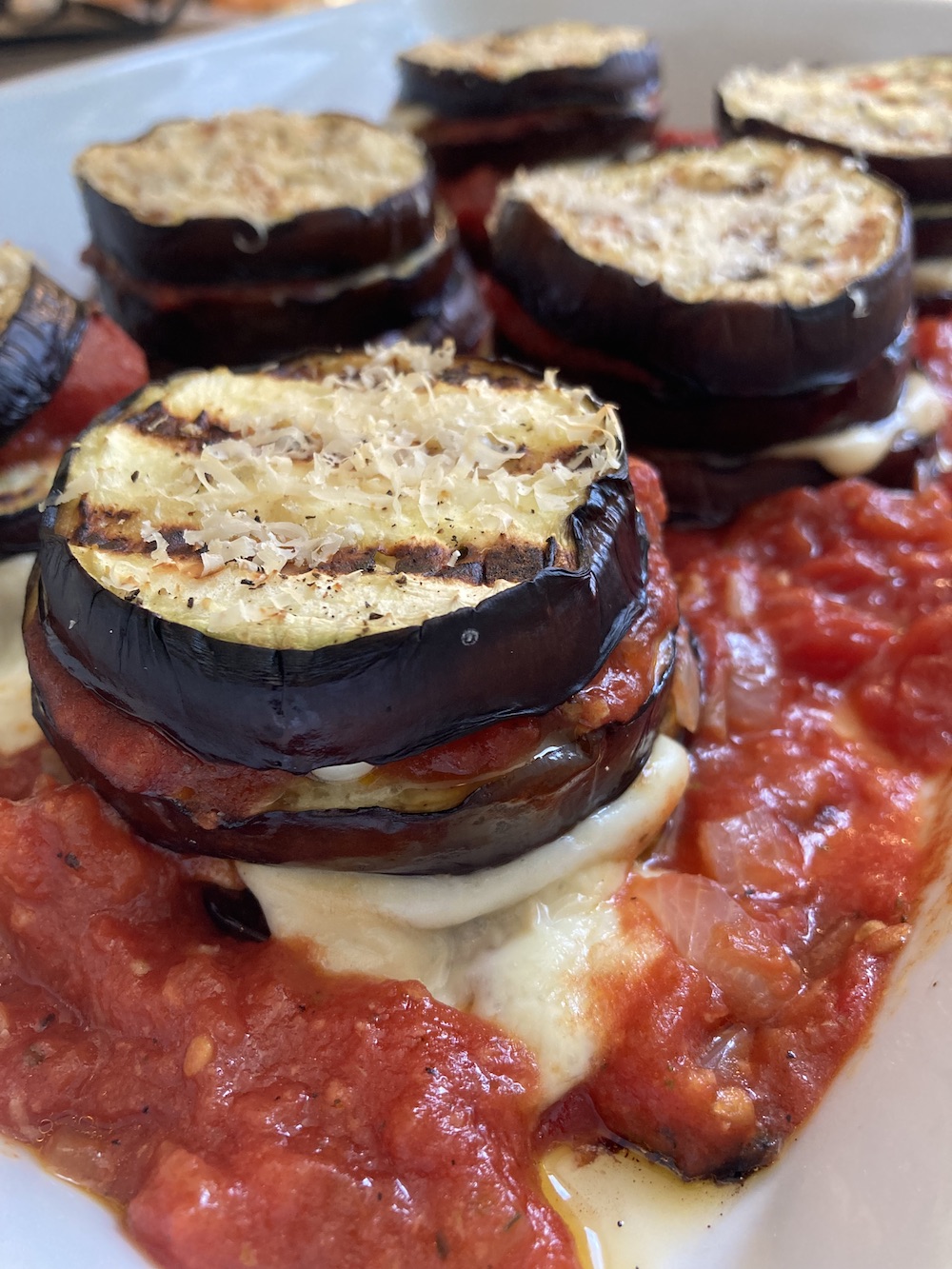
Grilled eggplant parmesan is next level eggplant parm without the fuss and frying!

DREAMING OF EGGPLANT PARMESAN?

OK, so let’s talk eggplant parm. I remember my grandmother making this classic dish by pan-frying the eggplant in a skillet prior to assembly. WRONG. No offense to my Italian American Nana, but eggplant shouldn’t be fried (and, yes, I feel an evil eye coming my way). For one, frying adds extra fat. And two, it makes your parm extremely heavy. Instead, GRILL the eggplant! Grilling makes for a lighter parm and adds the smokiness of simple indoor grilling – and, yes, indoor grilling adds noticeable smokiness – and takes your parm to the next level.

Think grilling adds extra time to this dish? Think again! Frying usually requires dredging the eggplant in both flour and an egg mixture. Grilling requires nothing more than slicing and seasoning the eggplant. PLUS: by grilling the eggplant, it is essentially cooked by the time you bake it, cutting down on baking time!

I do, however, recommend making your own marinara sauce – and I’ve included that simple recipe here, too.

Ready to make your Grilled Eggplant Parmesan?

HERE’S WHAT YOU’LL NEED:

*this recipe serves 4

  • 2 medium-large sized eggplants (sliced into ½” slices)
  • Salt & pepper
  • Olive oil
  • Marinara sauce
  • 200 g (~1 cup) of fresh mozzarella, or a good quality pizza mozzarella (sliced into ¼” slices)
  • Parmesan cheese, freshly grated
  • Fresh basil, for garnish

For the marinara sauce (if you’re making your own, instructions follow the parm instructions):

  • 3 T olive oil
  • 1 medium onion, diced
  • 2-4 garlic cloves, depending on your taste, crushed, minced, or finely sliced
  • about ¾ lb. ground beef (optional)
  • 796 ml (28 oz.) tinned whole tomatoes (I like Mutti) – or crushed tomatoes or passata if you prefer a smoother sauce
  • about a ¼ cup red wine (or white)
  • 1/4 teaspoon dried oregano (or a small sprig of thyme if you prefer)
  • about 1/4 cup of freshly grated parmesan cheese
  • Salt & pepper

HERE’S HOW TO MAKE NEXT LEVEL GRILLED EGGPLANT PARMESAN

Prep your marinara: If you’re making your own marinara, do this first, and keep it warm (my recipe is below). If you’re using a jarred sauce, have it ready to go by keeping it room-temperature or warm in a separate sauce pot.

Prep your eggplant and the grill: Get your indoor grill hot and ready. I use a 19.5 x 10” grill from LODGE that occupies two burners, vertically. Brush your grill with a bit of olive oil. Slice the eggplant into ½” slices. Season on both sides with salt and pepper.

Grill the eggplant: When the grill pan is hot (medium-high heat), place the eggplant slices onto the grill. Grill for about 3 minutes per side. You should see deep, char grill marks. If you’re using a grill pan like mine, the grill pan should fit one medium sized eggplant, about 11-12 slices. In which case, do the same with the second eggplant – slice, season, and grill, and put aside.

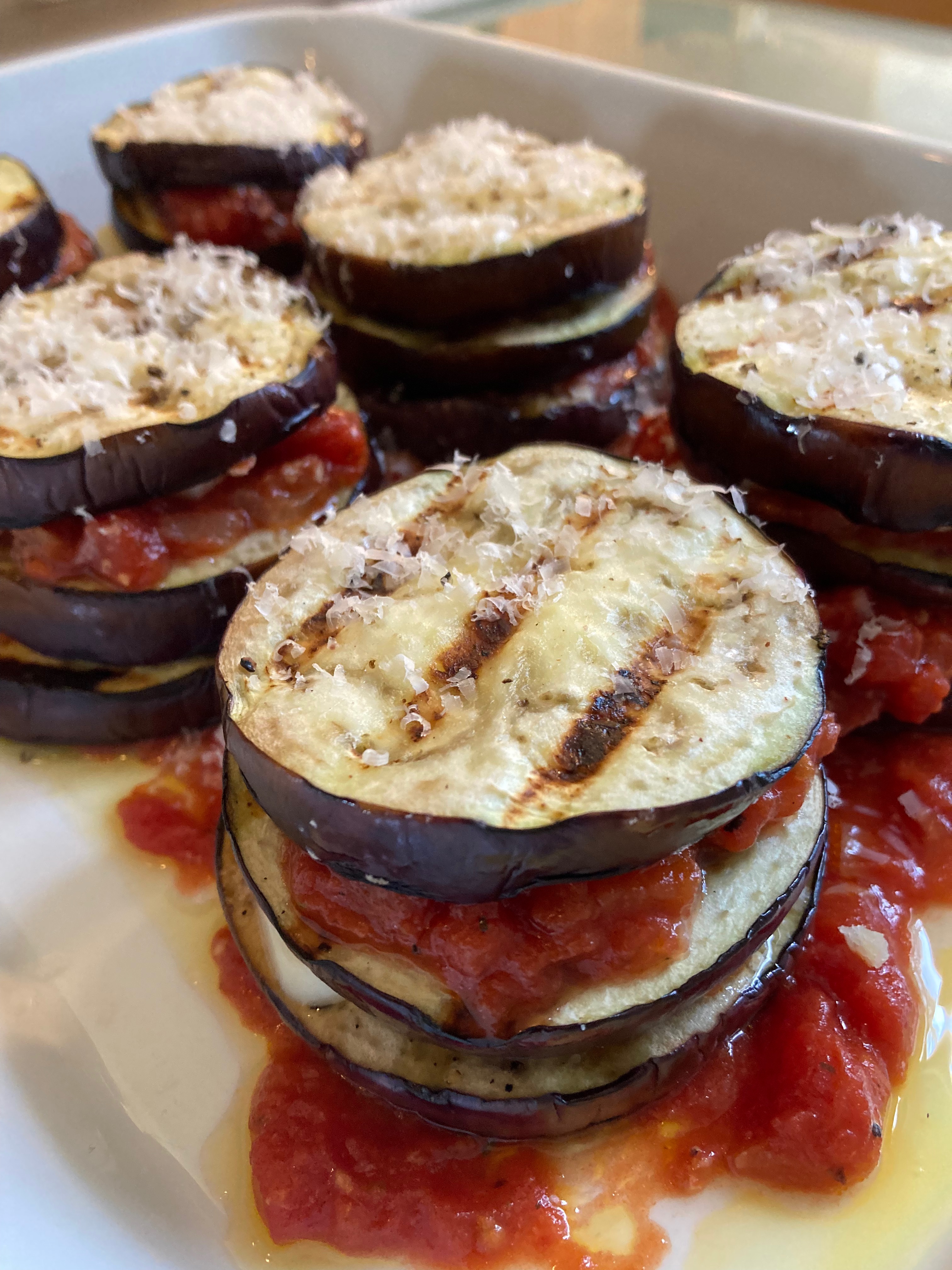
Assemble your parm: In a large baking or casserole dish (at least 14” x 13”), lightly coat the bottom of the dish with olive oil. Then add a thin layer of marinara on the bottom of the dish. Begin layering the first slices of eggplant. On each slice of eggplant, place a bit of marinara, then a slice of mozzarella, then a dusting of parmesan cheese. Repeat with another slice of eggplant, marinara, mozzarella, and parmesan. Then top with a third slice of eggplant. You should have about 8 towers of eggplant consisting of three slices of eggplant in each tower. Cover with a dusting of parmesan.

Bake for about 20 minutes at 400F: Bake until the cheese melts. Remember, both your eggplant and your marinara are cooked. The baking process in simply to melt the cheese and combine all the flavors. Serve a tower (or two) to each person and garnish with fresh basil.

TIPS AND TROUBLESHOOTING:

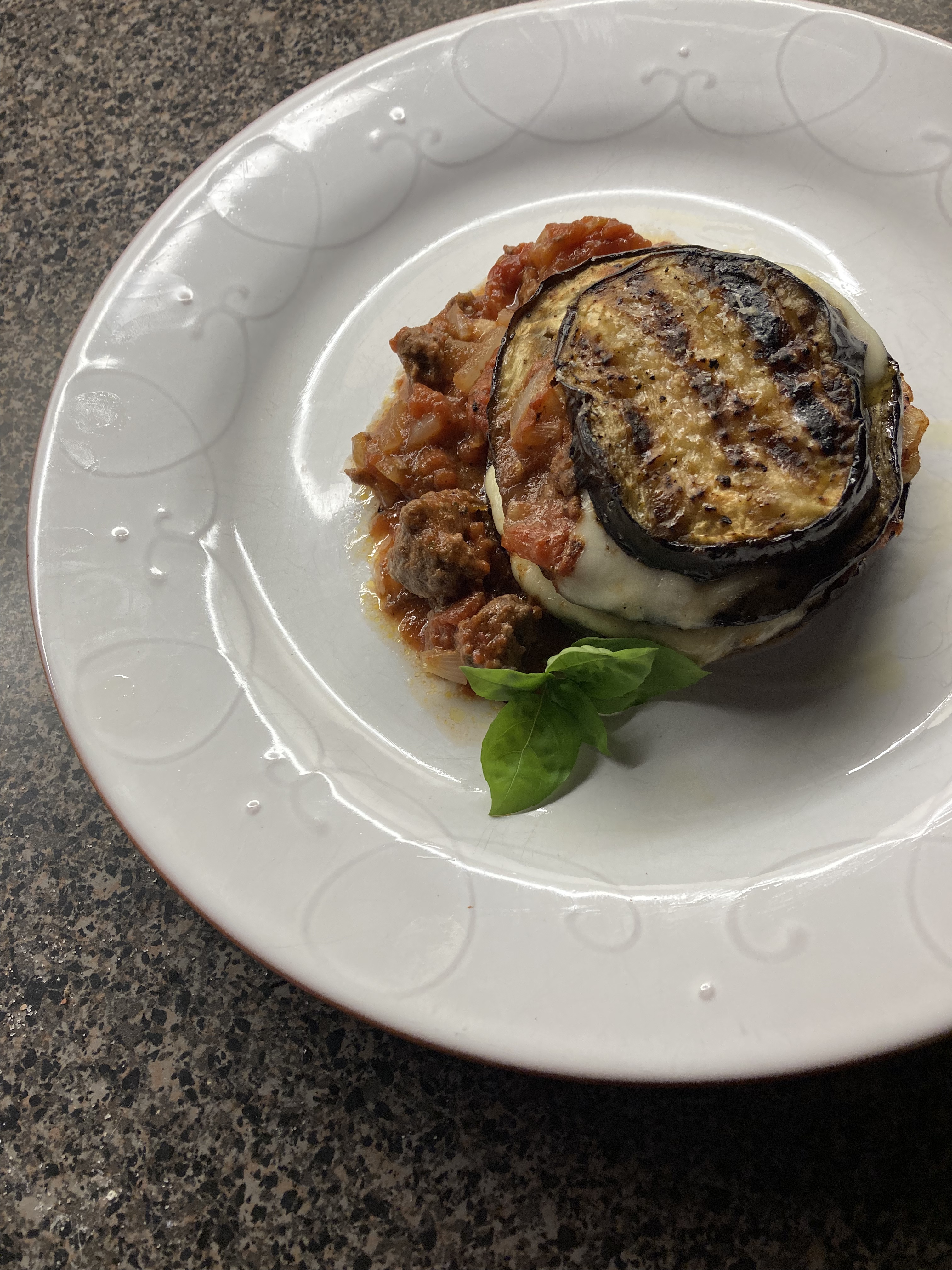
“My family is full of carnivores”: Mine too! I actually make my marinara as a Bolognese. Instructions are below.

“I don’t have as large an indoor grill”: If your indoor grill pan only accommodates one burner, you’ll have to perform the above grilling in 4 stages, if you’re serving 4 people. The good news is, if you’re cooking for two, you’ll only have to grill in 2 stages, one stage per half eggplant and halve the entire recipe (i.e. one eggplant as opposed to two). Or…invest in a larger grill pan that occupies two burners – this saves a lot of time and has many, many applications – the one I have is reversible! Investment: about $70.00 USD.

Size of the eggplants: Try to choose medium-large sized eggplants that will give you 11-12 slices each. I generally discard the upper 1-2 slices at the neck of the eggplant if they are too narrow. This recipe allows for 4 servings, which assumes 2 towers per person, with each tower consisting of 3 slices of eggplant (i.e. 6 slices of eggplant per person, 2 towers/person). If you’re serving this as a first dish (but not the main event), I recommend one tower/person.

MY MARINARA SAUCE RECIPE

Making your own marinara is simple and well worth the effort when compared to current store-bought sauces, which, in my opinion, are outrageously overpriced.

HERE’S HOW TO MAKE YOUR OWN MARINARA

Heat the olive oil in a dutch oven or large sauce pot. Then add your diced onions. Season them with a bit of salt. Sauté until onions are translucent, about 2 1/2 minutes. Add your garlic and move it around for about a minute (garlic cooks quickly and you don’t want it to burn it!).

Add ground beef if you’re using ground beef. Cook for about 3 minutes until the beef looks sealed – that is, until outer edges are no longer pink.

Then add the whole tomatoes. Despite other cooks who might recommend rinsing the tin of tomatoes with a bit of water and adding it, I do NOT recommend this. Instead, if you want to thin out your sauce slightly, add a splash of chicken stock (about 2 T). Break up the whole tomatoes with a wooden spoon to desired texture. Personally, I like a rustic sauce, so I go light on the breaking up. Then add your wine. Allow the wine to evaporate and cook down, about 2 minutes. If you like thyme, add a sprig. If you like oregano, add it dried. If you have a parmesan rind, add it in. Give it a stir and leave it to simmer for about 15 minutes on a low heat.

Finally, add the grated parmesan cheese if you haven’t added a parmesan rind earlier. If you have, skip the added grated cheese. (Don’t add the grated cheese earlier, as the flavor will dissipate quickly.) That’s it! Your home-made marinara is ready to use in your grilled eggplant parmesan recipe.